
Employee Engagement Is Falling, How Leadership Must Evolve
Employee engagement is declining in 2026 because leadership development often fails to translate insight into daily behavior. Practice-based approaches, such as executive coaching and action learning sets, help leaders apply learning in real time, leading to stronger engagement, retention, and performance.
A Shift Leaders Can Feel Before They Can Name
Recent findings from Gallup reflect a shift that many leaders across organizations are already sensing, often before they even have language for it.
Employee engagement has dropped to one of the lowest points in the past decade, while more individuals now report struggling (49%) than thriving (46%) in their lives and work. At the same time, over half of the workforce is either actively looking for a new role or quietly watching for opportunities, even as many feel constrained from making a move.
What begins to emerge is not simply disengagement, but a kind of contained tension that shows up in subtle ways: conversations that lack depth, decisions that feel delayed or overextended, and teams that continue to function while something more generative remains just out of reach.
In moments like these, organizations often respond by expanding access to leadership development through additional content, training programs, or resources. Yet the data suggests that what is needed is not necessarily an increase in information, but a different relationship to it, one that allows insight to be carried into the lived experience of everyday work.
(Source: Gallup, “Employee Engagement Sinks to 10-Year Low” and related workforce research, 2026)
This Work Sits Within a Larger Conversation
This perspective is part of a broader body of work we are exploring at Henley Leadership Group, where we are looking closely at the shifts shaping leadership development and executive coaching in Seattle and across the U.S.
In our introduction to this series, we outlined six themes that we believe are beginning to redefine how leaders grow and how organizations must support that growth in a more integrated way. Each theme builds on the last, reflecting what we are seeing both in current workforce data and in our work with leaders across industries.
This article introduces our third theme.
Integrating Practice: The New Development Strategy
Earlier conversations explored steadiness and the role of humanity in expanding capacity across teams; this next phase turns toward application, inviting a more grounded question that many leaders are already asking in their own way.
How does leadership development move beyond insight and begin to shape how leaders actually show up in real time?
You can explore the full set of themes in our original article here: The 6 Leadership Trends Shaping 2026
Why Is Employee Engagement Declining Despite More Leadership Training?
Over the past decade, many organizations have significantly increased their investment in leadership development, executive coaching, and corporate training programs, making insight more accessible than at any point in recent history.
And yet, engagement continues to decline.
At the same time, the expansion of AI has made insight almost frictionless, placing an abundance of perspectives, language, and frameworks within immediate reach. In that context, leadership development begins to shift away from access and toward integration, asking how we stay in conversation with one another, work through real challenges together, and allow practice to shape what becomes lasting.
The current tension suggests that the challenge is not the availability or even the quality of leadership content, but the way in which that learning is integrated into daily work. Leaders often leave a session with shared language and a renewed sense of intention, only to find that once they return to the pace and complexity of their environment, those insights become difficult to access.
The demands of real-time decision-making, layered team dynamics, and constant change rarely create natural space for reflection or experimentation. Without a structure that supports returning to and working with new ideas over time, even meaningful learning can dissipate before it begins to influence behavior.
This is where many traditional leadership development and executive coaching approaches begin to lose traction because they are not consistently designed to extend into practice. Organizations that are rethinking this are increasingly turning toward more integrated models, through executive coaching and leadership development programs, that emphasize application over time.
What Does Practice-Based Leadership Development Mean?
Practice-based leadership development is an approach that centers learning within the flow of real work, allowing leaders to apply, reflect on, and refine their thinking over time rather than relying on a one-time insight.
What we are seeing, particularly within forward-thinking organizations, is a shift toward using practice as the primary vehicle for growth.
When leaders return to the same idea across multiple real situations, something begins to change in how that idea is held. It moves from being understood conceptually to being accessed more naturally under pressure.
In this context, leadership is developed through daily work.
Moments that might once have been seen as interruptions, such as difficult conversations ir unclear decisions, become the very conditions in which leadership capacity is strengthened.
Why Practice Matters in Today’s Workforce Environment
The current workforce environment makes this shift not only relevant but also necessary for organizations focused on employee engagement.
Gallup’s research highlights a workforce that is not only disengaged, but often feels unable to leave, creating a dynamic where dissatisfaction remains present within teams rather than resolving through movement.
In this kind of environment, the day-to-day experience of leadership becomes even more influential.
How expectations are clarified, how recognition is expressed, how feedback is delivered, and how decisions are navigated all shape whether individuals feel connected to their work or increasingly detached from it.
These experiences are shaped by a leader’s ability to access and apply knowledge in the moment, which is why practice becomes central to how leadership development translates into meaningful change.
How Do Action Learning Sets Bridge Insight to Practice?
One of the most effective ways organizations are beginning to operationalize practice-based leadership development is through Action Learning Sets, a structured approach commonly used in executive coaching and leadership development programs.
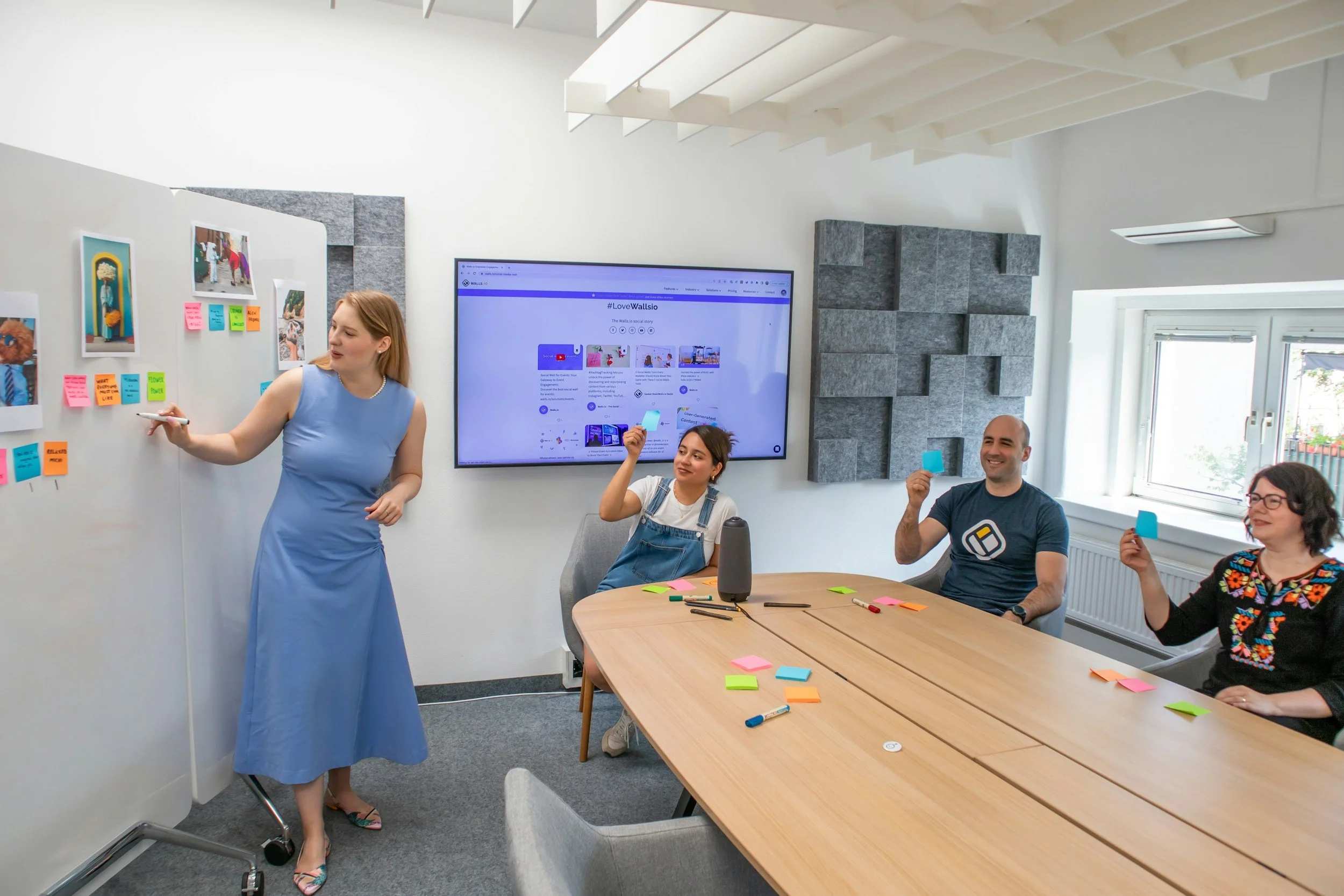
Action Learning Sets bring together small groups of leaders to work on real, current challenges within their organizations, creating a space where learning and application happen simultaneously.
Rather than discussing hypothetical scenarios, participants engage directly with the work they are navigating, using structured questioning, reflection, and shared perspective to deepen their thinking and inform action.
Between sessions, leaders take what has emerged and apply it in their actual work, returning to reflect on outcomes and refine their approach.
Over time, this process allows leadership development to become embedded within the rhythm of work itself, supporting not only greater clarity but greater consistency in how leaders show up.
If you are interested in experiencing this approach directly, you can join our upcoming First Friday leadership webinar, where we will explore Action Learning Sets in practice.
What Is the Future of Leadership Development?
Leadership development is evolving toward a more integrated model, where growth is shaped through ongoing practice rather than isolated learning experiences.
There is a growing recognition that lasting change does not come from exposure to new ideas alone, but from creating the conditions where those ideas can be revisited and refined over time.
For organizations investing in executive coaching, leadership training, and employee development, this shift invites a different design approach, one that places application and real-world context at the center of how leaders grow.
As this model continues to take hold, leadership development becomes less about stepping away from work and more about working differently within it.
Join the Conversation
On April 3, we will continue this conversation in our free First Friday webinar, focusing specifically on how Action Learning Sets create a bridge between insight and real-time application.
Join us in a day of leadership practice at Henley Live on May 7th in Seattle.
Watch the webinar recording introducing this theme and the practice of Reflective Learning.
Frequently Asked Questions
-
Employee engagement is declining as many people navigate ongoing uncertainty, experience a lack of meaningful growth, and find that leadership development does not always carry into how work is actually experienced day to day.
-
Practice-based leadership development centers on working with learning inside real situations, where leaders return to ideas over time, apply them in their work, and begin to build capability through experience rather than one-time understanding.
-
Action Learning Sets support leadership development by creating space for leaders to bring real challenges into conversation, think alongside others, and continue working with those challenges between sessions so that learning becomes part of how they lead, not something separate from it.